Welcome to
Go handmade's work with product safety
Go handmade has brought together its work with product safety in one place.
Here, we present our test reports, guides, videos, working methods and the experience we have gained through many years of working with products for crocheters and knitters.
Many of our products are used by crocheters and knitters who make projects for children under the age of three – for example, a sensory teddy bear. In such cases, it is essential that the individual parts are attached correctly.
Therefore, it is not enough for a material or part to have been tested. The accompanying instructions are also of crucial importance.
With this category on our website, we openly present how we work and share our experience, including with testing institutes and authorities.
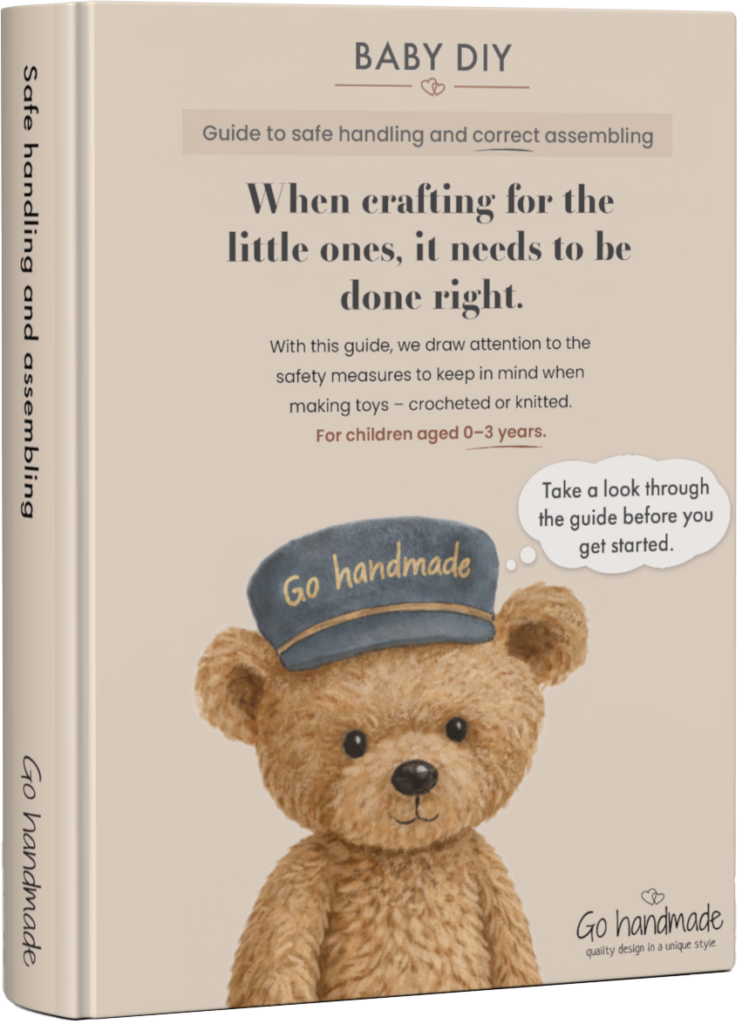
10-seconds preview
Take a quick look inside the book.
A test report
does not
stand alone
When a toy is homemade, crocheted or knitted, an important part of its safety lies in the assembly itself and in the ongoing inspection of the finished work.
Guide for
small-scale producers
of crocheted or
knitted toys
What does
a test report
actually show?
We showed
the test ourselves -
and the understanding
behind it
From questions
to concrete
action
A signature
documents
a signature
Important information:
Normal adult supervision can never be replaced by a test report.
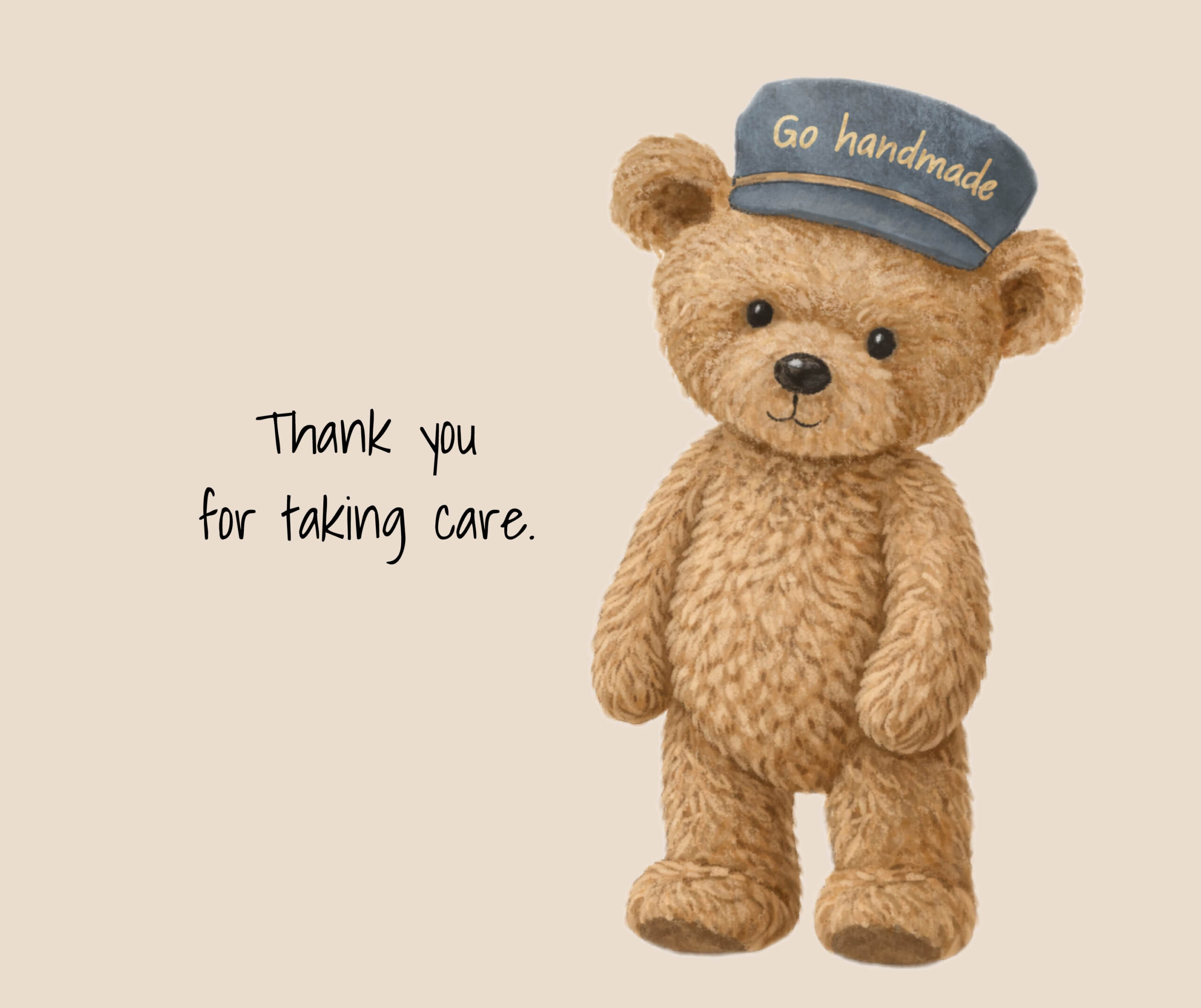
A test report does not stand alone
Go handmade’s test reports are openly available to everyone.
Read more ⭢
Pull test
We showed the test ourselves – and the understanding behind it
For us, it is important to point out just how crucial the actual attachment is – especially when eyes are used in crocheted and knitted projects. An eye may have a very strong backstop, but that is of little help if the crocheted or knitted fabric is so loose that the entire eye can be pulled out through the stitches.
In our assembly instructions, we therefore show how the area around the eye can be reinforced by sewing a kind of grid around the stitches, so that the attachment does not depend solely on the backstop, but also on the crocheted or knitted fabric itself.
Go handmade therefore also decided to show a specific pull test of an eye attached to a crocheted project for children under the age of three. The eye is attached according to our instructions and subjected to the required pulling force – and more. To comply with the applicable standard, the attachment must be able to withstand 90 Newtons.
In the video, you can see the test and the result for yourself. Here, we document that when our assembly instructions are followed, the pull test can be passed – in our test, more than 100 Newtons was measured.
That is the difference between simply reading a result in a report and being able to see the work behind it for yourself.
What does a test report actually show?
A test report can look convincing. The front page may say Pass.
But the report is only as useful as the information it contains – and as the reader is able to understand.
Read more ⭢
Letter to the Danish Safety Technology Authority
For several years, we struggled to find clear answers from both authorities and test institutes. In 2022, Hanne Tolberg therefore wrote a critical letter to the Danish Safety Technology Authority.
Read more ⭢
Two Safety Guides
With professional advice from Torben Foged, ForbrugerLaboratoriet (Danish consumer testing laboratory), we have prepared two guides. One concerns supervision and the role of parents, and the other safety for homemade pacifier chains.
Read more ⭢
Crochet & Knit
Safe handling and assembly
Many people, with the best of intentions, would like to crochet or knit a cute teddy bear when a new little one is expected – perhaps as a gift for a baby shower. But it is important to understand that when making a sensory teddy bear, a pacifier chain or other handmade item for children under the age of three, there is a responsibility to make it correctly. And the recipient must, of course, also be aware of how the product is used.
Go handmade has therefore developed the guide Crochet & Knit – safe handling and assembly.
The guide covers, among other things, products for prams and cots, teddy bears and sensory toys, attachment of eyes, toys for children who cannot yet sit up, clothing, activity figures and EN 71.
The entire guidebook has been developed with professional assistance from ForbrugerLaboratoriet. It was created on the basis of our own experience of how difficult it can be to find and understand the relevant requirements for crocheted and knitted projects.
The guide has required extensive work. And although this is not about anyone having to thank us for anything, we would like to point out that, for a company of our size, developing such a detailed guide has been a significant investment. It amounted to at least DKK 200,000.
We have put many hours into the illustrations so that the content would be understandable and encourage people to explore it in greater depth. The guide has been translated through a professional translation agency, published in 11 languages – and it is free for everyone.
The guide provides guidance. It is not a guarantee of the finished DIY product.
A signature documents a signature
Codes of Conduct, audits and supplier declarations can be relevant tools. But a signature primarily documents that a document has been signed
Read more ⭢
Complaints
Have you purchased a Go handmade product that is not as it should be?
Read more ⭢
Finally – how we understand responsibility
We do not claim that we can control everything, or that mistakes can never happen.
Read more ⭢
Produktsikkerhed & ansvar
Go handmade har samlet sit arbejde
med produktsikkerhed ét sted
Her fremlægger vi vores testrapporter, guider, videoer, arbejdsmetoder og de erfaringer, vi har gjort os gennem mange års arbejde med produkter til DIY-branchen.
Mange af vores produkter bruges i projekter til børn under tre år. I DIY-verdenen er en del først en del af det færdige produkt, når nogen har hæklet, strikket og monteret den.
Derfor er det ikke nok, at et materiale er testet. Den vejledning, der følger med, har også betydning.
Alt for ofte ser vi produkter blive markedsført med ord som sikker, holdbar og tryg, mens vejledningen er så overfladisk, at den ikke hjælper brugeren med at forstå, hvordan produktet skal monteres og anvendes forsvarligt.
Vi ser samtidig virksomheder bruge meget plads på medlemskaber, compliance-systemer, audits og underskrifter – og langt mindre på de konkrete produkter, de forhandler, og den vejledning, der bør følge med produkter til projekter for de mindste.
Det betyder ikke, at de ikke kan have styr på deres ansvar. Det kan vi ikke vide.
Men det undrer os, når det konkrete arbejde med produkterne næsten ikke er synligt.
Med denne fremlæggelse håber Go handmade at kunne bidrage til et højere niveau i branchen.
Det er svært at pege på ulovlige og mangelfulde produkter, der importeres over vores grænser, hvis vi ikke samtidig er villige til at se kritisk på det, vi selv kan gøre bedre.
En testrapport
står ikke alene
Go handmades testrapporter ligger åbent tilgængelige for alle.
Det gør de, fordi vi ønsker, at kunder, makers, småproducenter og andre fagligt interesserede kan se, hvad vores vurderinger bygger på.
Men en testrapport skal forstås rigtigt.
Den dokumenterer den konkrete prøve, som er blevet testet. Den fortæller ikke alene hele historien om alle farver, alle produktioner og alle beslægtede materialer.
Det samlede dokumentationsgrundlag består også af viden om råmaterialer, fibre, farvning, produktion, certificeringer, erklæringer, leverandørkendskab, langvarige samarbejder og målrettede opfølgende test.
Sådan arbejder vi
Hanne Tolberg har arbejdet med produktion i Asien siden 1989. Vores arbejde bygger på erfaring, indsigt og langvarige relationer til de mennesker og virksomheder, vi samarbejder med.
Vi stiller konkrete krav til blandt andet kemi og materialer. Leverandørerne skal kende og arbejde efter de relevante europæiske krav, herunder REACH og POP. Go handmade accepterer desuden ikke en række særligt problematiske stoffer, selv når de ikke nødvendigvis er forbudt i den konkrete anvendelse.
Vi gennemfører også stikprøver ved anerkendte og akkrediterede laboratorier. I nogle tilfælde tester vi mere, end lovgivningen direkte kræver, fordi testene kan være en vigtig del af det samlede billede.
Vi måler ikke kinesiske arbejdspladser efter danske forhold. Vi vurderer dem i deres lokale sammenhæng og på baggrund af vores egne besøg, relationer og erfaringer.
Det betyder ikke, at alt accepteres. Det betyder, at vores vurdering bygger på reel indsigt – ikke alene på rapporter og standardformularer.
Guide til småproducenter
af håndlavet legetøj
Den, der sælger en hæklet eller strikket bamse eller dukke til børn under tre år, er selv producent af det færdige legetøj.
Det betyder, at det færdige produkt skal kunne leve op til de samme krav som legetøj købt i en butik.
Go handmade dokumenterer de materialer og dele, vi leverer.
Småproducenten må selv dokumentere det færdige produkt – herunder hvilke materialer der er anvendt, hvordan delene er monteret, og hvilken aldersgruppe produktet er beregnet til.
Vi har derfor udarbejdet en guide, som forklarer, hvordan vores testrapporter og vejledninger kan bruges som en del af småproducentens eget dokumentationsarbejde.
Guiden er ikke juridisk rådgivning. Den er et praktisk supplement til det arbejde, den enkelte producent selv skal udføre.
Vi deler den, fordi produktsikkerhed for børn under tre år er vigtig – og fordi det stadig er meget svært at finde forståelig hjælp på området.
Brevet til
Sikkerhedsstyrelsen
I flere år kæmpede vi med at finde klare svar hos både myndigheder og testinstitutter.
I 2022 skrev Hanne Tolberg derfor et kritisk brev til Sikkerhedsstyrelsen. Brevet beskrev blandt andet problemer med uklare testrapporter, utilstrækkelig information om aftagelige dele og standarder, som er vanskelige at forstå for dem, der faktisk udvikler og producerer varerne.
Svaret var pænt, men uklart. De problemer, der blev peget på, ville blive taget med videre.
Flere år senere er intet ændret.
Brevet har ligget på vores hjemmeside, og flere hobbyproducenter har fortalt, at det hjalp dem at læse, at de ikke var alene om deres frustrationer.
Hvad viser en
testrapport egentlig?
En testrapport kan se overbevisende ud. På forsiden står der måske Pass. Men rapporten er kun så anvendelig som de oplysninger, den indeholder – og som læseren kan forstå.
Go handmade har selv oplevet rapporter med uklare beskrivelser, manglende oplysninger og direkte fejl. I en konkret sag var det ikke tydeligt beskrevet, hvilke dele produktet bestod af, og om nogle af dem kunne tages af. Det skabte usikkerhed om, hvad der reelt var blevet testet.
I en anden rapport var et produkt beskrevet som et helt andet produkt og til en forkert aldersgruppe. Rapporten måtte rettes flere gange, før den svarede til det produkt, som faktisk var indsendt.
Det er netop derfor, vi ikke mener, at ordet Pass kan stå alene. Man må kunne forstå, hvad der er testet, hvordan produktet så ud, hvilke dele det bestod af, og hvilke betingelser resultatet gælder under.
En underskrift
dokumenterer en underskrift
Code of Conducts, audits og leverandørerklæringer kan være relevante redskaber.
Men en underskrift dokumenterer først og fremmest, at et dokument er blevet underskrevet. En audit viser, hvad der blev konstateret inden for en bestemt ramme og på et bestemt tidspunkt.
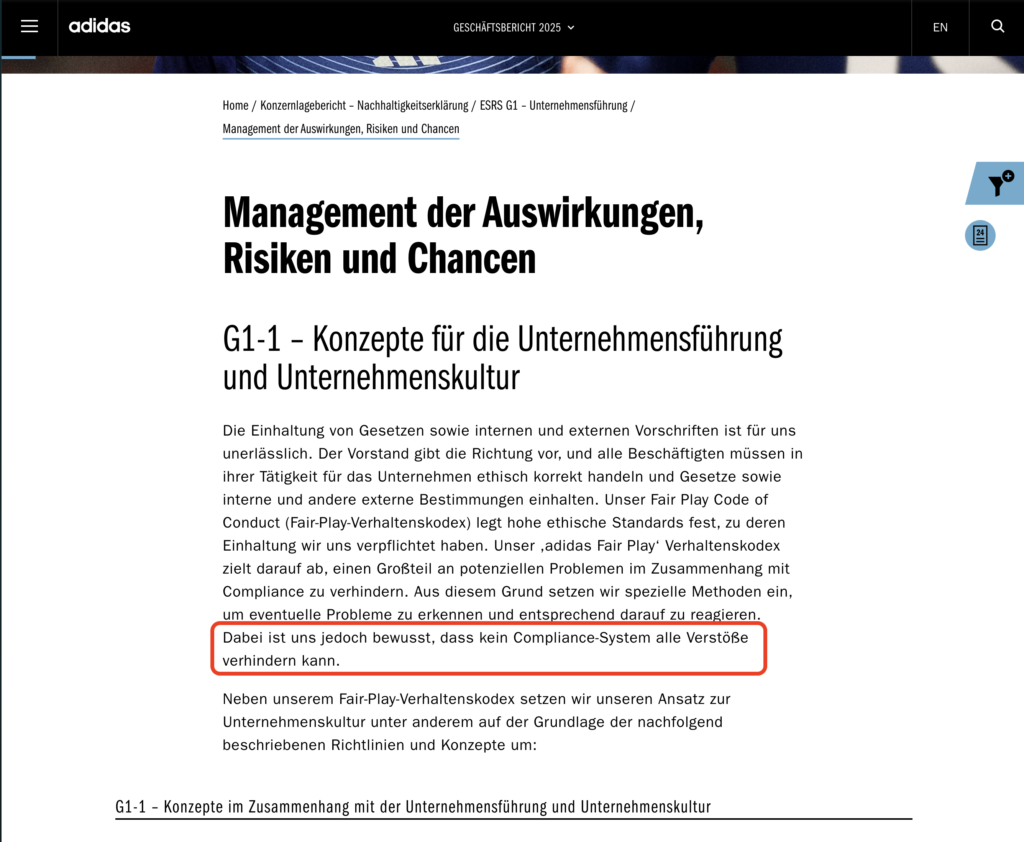
Selv adidas, som har et omfattende internationalt compliance-system, skriver, at intet compliance-system kan forhindre alle overtrædelser.
Det er nøgternt – og sandt.
Derfor undrer det os, når medlemskaber, audits og underskrifter får mere plads end det konkrete arbejde med produkter, sikkerhed og vejledning.
Det betyder ikke, at de pågældende virksomheder ikke kan have styr på deres ansvar. Det kan vi ikke vide.
Vi kan blot konstatere, at arbejdet ikke altid er synligt.
Fra spørgsmål
til konkret handling
I juni 2026 skrev Janina Spindler til Go handmade på vegne af en gruppe med næsten 15.000 producenter af håndlavet legetøj i EU og Storbritannien.
Gruppen ønskede at bruge Bohème Velvet Double, men havde brug for et stærkere dokumentationsgrundlag.
Vi gik ind i dialogen og forklarede, hvordan dokumentationen for garn skal forstås som et samlet grundlag af test, råmaterialer, fibre, farvning, produktion, certificeringer og leverandørkendskab.
Dialogen førte desuden til nye EN 71-3-test af fire farver Happy Chunky og fire farver Bohème Velvet.
Alle otte farver bestod.
Janina skrev efterfølgende, at gruppens dokumentation nu var watertight.
Det er et konkret eksempel på, hvordan et spørgsmål fra dem, der bruger vores produkter, kan føre til ny viden og yderligere dokumentation.
Go handmades forståelse
af ansvarlighed
Vi påstår ikke, at vi kan kontrollere alt, eller at fejl aldrig kan ske.
Vi beskriver det, vi ved.
Vi viser det, vi gør.
Vi dokumenterer det, vi kan.
Og vi reagerer, når virkeligheden ikke stemmer med det, der står på papiret.
Det er vores forståelse af ansvarlighed.
Vi underskriver ikke
for underskriftens skyld
Go handmade forholder sig til konkrete og relevante krav fra vores kunder.
Vi fremlægger vores dokumentation og besvarer faglige spørgsmål.
Vi underskriver derimod ikke uden videre generelle Code of Conducts og leverandørerklæringer alene for at opfylde en administrativ procedure.
Det er muligt, at vi i praksis underskriver de såkaldte kontrakter, fordi vi ellers ikke kan godkendes som leverandør.
Så står papirerne pludselig stærkere end virkeligheden.
Det er svært at tage alvorligt.
Efter at have læst den ene ledelsesberetning efter den anden, hvor ansvarlighed især bliver beskrevet gennem medlemskaber, audits og underskrifter, blev vi til sidst så provokerede, at vi besluttede at lægge Go handmades eget bud frem.
How we work
Our work is based on experience, insight and long-standing relationships with the people and companies we work with. Hanne Tolberg, owner of Go handmade, has worked with production in Asia since 1989.
We set specific requirements for, among other things, chemicals and materials. Suppliers must be familiar with and work in accordance with the relevant European requirements, including REACH and POP.
We do not assess Asian workplaces according to Danish conditions. We assess them within their local context and on the basis of our own visits, relationships and experience.
Our assessment is based on genuine insight – not solely on reports and standard forms.
A test report does not stand alone
Go handmade’s test reports are openly available to everyone.
They are made available because we want to be as transparent as possible and present our documentation to those who are interested in studying it in more detail.
Test reports are complex and are not written for the ordinary consumer. Professional knowledge is required to understand which requirements apply to the individual product and how the reports should be read.
A test report documents the specific sample that has been tested. On its own, it does not tell the full story about all colours, all production batches and all related materials.
The overall basis of documentation also consists of knowledge about raw materials, fibres, dyeing, production, certifications, declarations, supplier knowledge, long-term collaborations and targeted follow-up testing.
Guide for small-scale producers of crocheted or knitted toys
Anyone who sells a crocheted or knitted teddy bear or doll for children under the age of three is themselves the manufacturer of the finished toy. This means that the finished product must be able to meet the same requirements as toys purchased in a shop.
Go handmade documents the materials and parts we supply. The small-scale producer must document the finished product – including which materials and parts have been used, that the relevant parts meet the applicable requirements, and how they have been attached. For example, eyes must be attached in such a way that the finished attachment can meet the applicable pull-force requirement.
We have therefore prepared a guide explaining how our test reports and instructions can be used as part of the small-scale producer’s own documentation work.
The guide does not constitute legal advice. It is intended as an aid for those who sell their own handmade items and projects for children under the age of three – making it easier to understand what each individual producer is responsible for ensuring.
We share it because product safety for children under the age of three is important – and because it is still very difficult to find understandable guidance in this area.
What does a test report actually show?
A test report can look convincing. The front page may say Pass.
But the report is only as useful as the information it contains – and as the reader is able to understand. This can be difficult.
Go handmade has itself encountered reports with unclear descriptions, missing information and outright errors.
In one specific case, we found it misleading that a test report could refer to removable components without at the same time making it clear how this should be understood. When there are so few requirements for test institutes to use unambiguous wording and to provide visual documentation of what they have tested, we believe there is far too great a risk of misunderstandings.
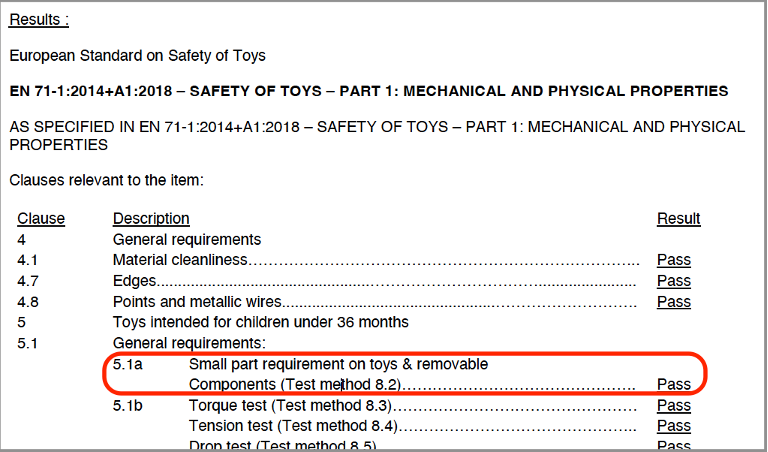
It should be possible to do this far better – precisely because this concerns product safety for the youngest children.
In another report, our product was described as a completely different product and as being intended for the wrong age group. The report had to be corrected several times before it corresponded to the product that had actually been submitted.
We had not noticed the error immediately either. The report had even been forwarded to one of our retailers without any reaction.
This says something very human about the way test reports are read: You see Final result: Pass and think that everything must therefore be in order.
I myself had not noticed that further down it said Garden Tool Set, even though the test product shown at the top was our Round Teether.
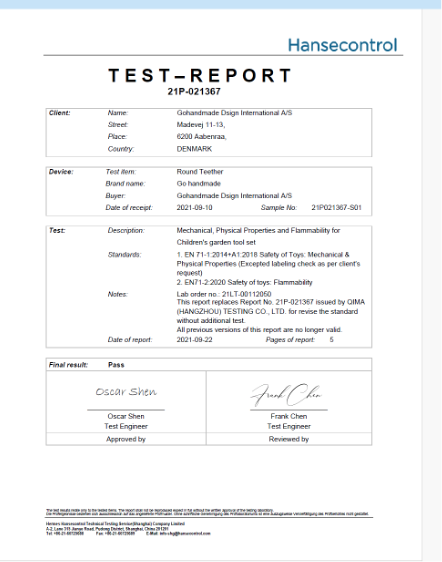
This is precisely why we do not believe that the word Pass can stand alone.
It must be possible to understand what was tested, what the product looked like, which parts it consisted of, and under which conditions the result applies.
And in 2026, we also believe that the testing process should be documented by video. If a disagreement subsequently arises about what the test institute actually received, examined or carried out, there should be more than a written statement to rely on.
Simple video documentation would make it far more difficult for doubts to arise afterwards about what the sample looked like, which parts it consisted of, and what was actually done during the test.
We believe there is a need for far clearer requirements regarding how test institutes document their work.
Letter to the Danish Safety Technology Authority
For several years, we struggled to find clear answers from both authorities and test institutes. In 2022, Hanne Tolberg therefore wrote a critical letter to the Danish Safety Technology Authority.
Among other things, the letter described problems with unclear test reports, insufficient information about removable parts, and standards that are difficult to understand for those who actually develop and manufacture the products. The response was polite, but unclear. The issues we raised would be taken forward. Several years later, we do not believe that anything has changed.
The letter has been available on our website, and several small-scale hobby producers have told us that it helped them to read that they were not alone in their frustrations.
Two Safety Guides
With professional advice from Torben Foged, ForbrugerLaboratoriet (Danish consumer testing laboratory), we have prepared two guides.
One concerns supervision and the role of parents, and the other safety for homemade pacifier chains.
Both have been prepared as a supplement to our other guidance on products for children under three years of age.
Also check the materials and the finished product
Always check materials and parts thoroughly when they are received. Do not use a part if it shows signs of damage, cracks or other other signs of impact.
Check again when the crocheted or knitted project has been fully assembled.
Toys and DIY projects are used, dropped, chewed on and worn. Therefore, the finished product must also be checked regularly. Discard it if damage or signs of wear occur.
From questions to concrete action
In June 2026, a representative of a group with almost 15,000 producers of crocheted and knitted toys in the EU and the UK contacted Go handmade.
The group wanted to use Bohème Velvet Double, but needed a stronger basis of documentation. We entered into a dialogue and explained how the documentation for yarn should be understood as an overall basis consisting of tests, raw materials, fibres, dyeing, production, certifications and supplier knowledge.
The dialogue also led to new EN 71-3 tests of four colours of Happy Chunky and four colours of Bohème Velvet. All eight colours passed, as expected. Afterwards, the representative wrote that the group’s documentation was now watertight.
This is a concrete example of how a relevant enquiry can lead to a professional assessment of whether the basis of documentation should be supplemented – for the benefit of those who use our products and as part of our ongoing spot checks.
At the same time, for Go handmade, it was a special experience to see how dedicated and responsible the contact person was in working with the documentation relating to product safety. It made an impression on us.
A signature documents a signature
Codes of Conduct, audits and supplier declarations can be relevant tools.
But a signature primarily documents that a document has been signed. An audit shows what was established within a specific framework and at a specific point in time.
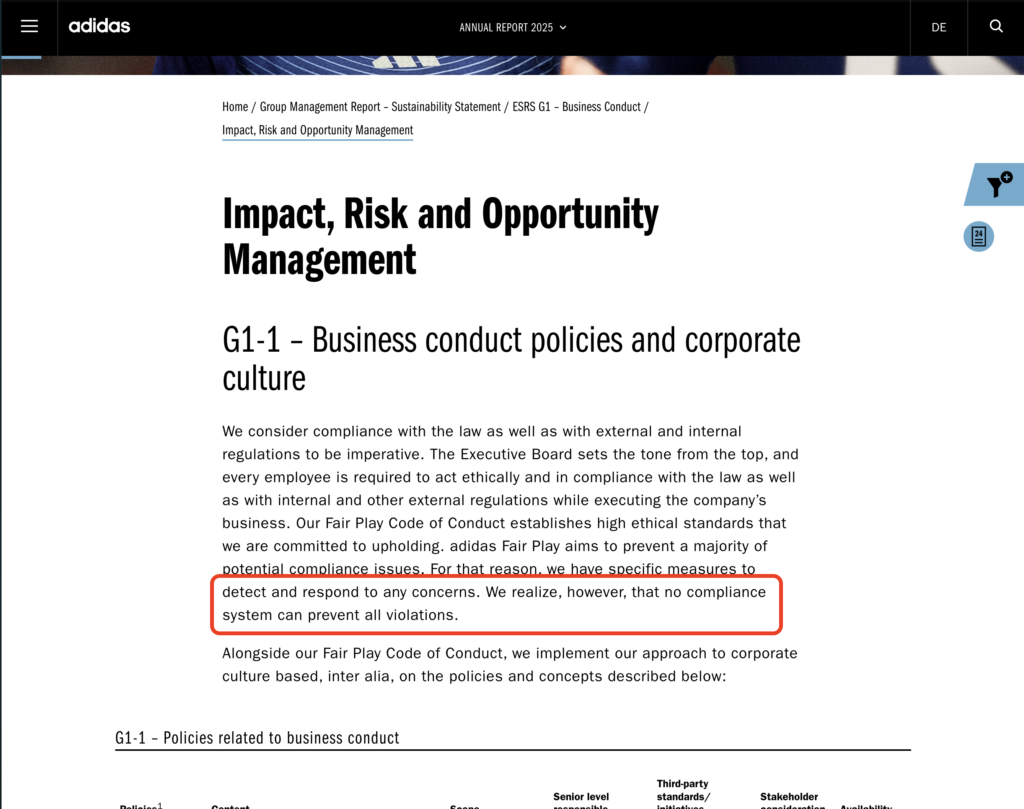
Even Adidas, which has an extensive international compliance system, states that no compliance system can prevent all violations. That is matter-of-fact – and true.
That is why we find it surprising when memberships, audits and signatures are given more prominence than the concrete work with products, safety and guidance. This does not mean that the companies concerned may not have their responsibilities under control. We cannot know that. We can simply observe that the work is not always visible.
Go handmade responds to specific and relevant requirements from our customers. We present our documentation and answer technical questions. However, we do not automatically sign general Codes of Conduct and supplier declarations solely to fulfil an administrative procedure.
It is possible that, in practice, we do sign such documents, and we do so because otherwise we cannot be approved as a supplier. It is precisely here that we believe there is a risk of the paperwork being given greater weight than the work that is actually carried out.
After reading one management report after another in which responsibility is described primarily through memberships, audits and signatures, we therefore decided to create this category, where we have brought together Go handmade’s own work, provided concrete examples and presented our own understanding of responsibility.
Have you purchased a Go handmade product that is not as it should be?
We are sorry to hear that. We take great care with our products, but of course mistakes can happen.
Always contact the retailer where the product was purchased and describe the issue as specifically as possible.
If the product has been used or mounted into a project, it is very helpful if you also provide some information about the circumstances – for example, how the product was attached, how long it had been in use, and whether it may have been exposed to impacts, drops or other strain.
Photos of the product and the damage are also very valuable.
The better the information we receive, the better able we are to understand what has happened and follow up on the matter.
Finally – how we understand respondsibility
We do not claim that we can control everything, or that mistakes can never happen.
We describe what we know.
We show what we do.
We document what we can.
And we respond when reality does not match what is written on paper.
That is how we understand responsibility at Go handmade.
Select language
Choose the language you want to download the file in.